

What Is Jewelry Electroplating? How Gold, Rhodium, and Silver Plating Work
Written by Jules C
March 10, 2026
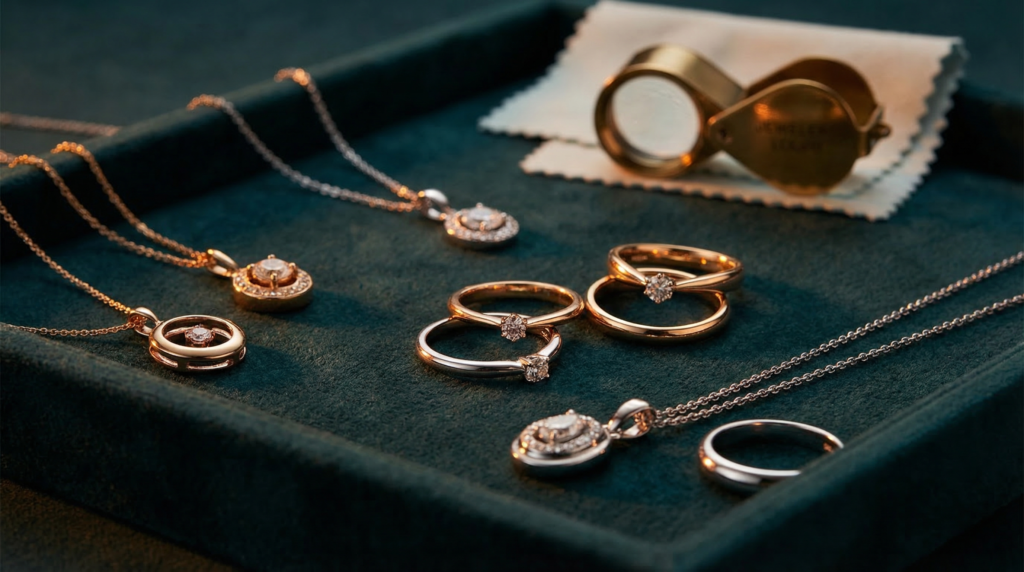
If your gold jewelry has started to look brassy, your white gold ring has taken on a yellow tinge, or a beloved silver piece has lost its luster, there's a good chance electroplating is the answer. Jewelry electroplating is one of the most widely performed and visually transformative services in professional jewelry repair — and one Quick Jewelry Repairs handles constantly. This guide explains exactly what electroplating is, how the process works, and whether it's the right solution for your piece.
What Is Jewelry Electroplating?
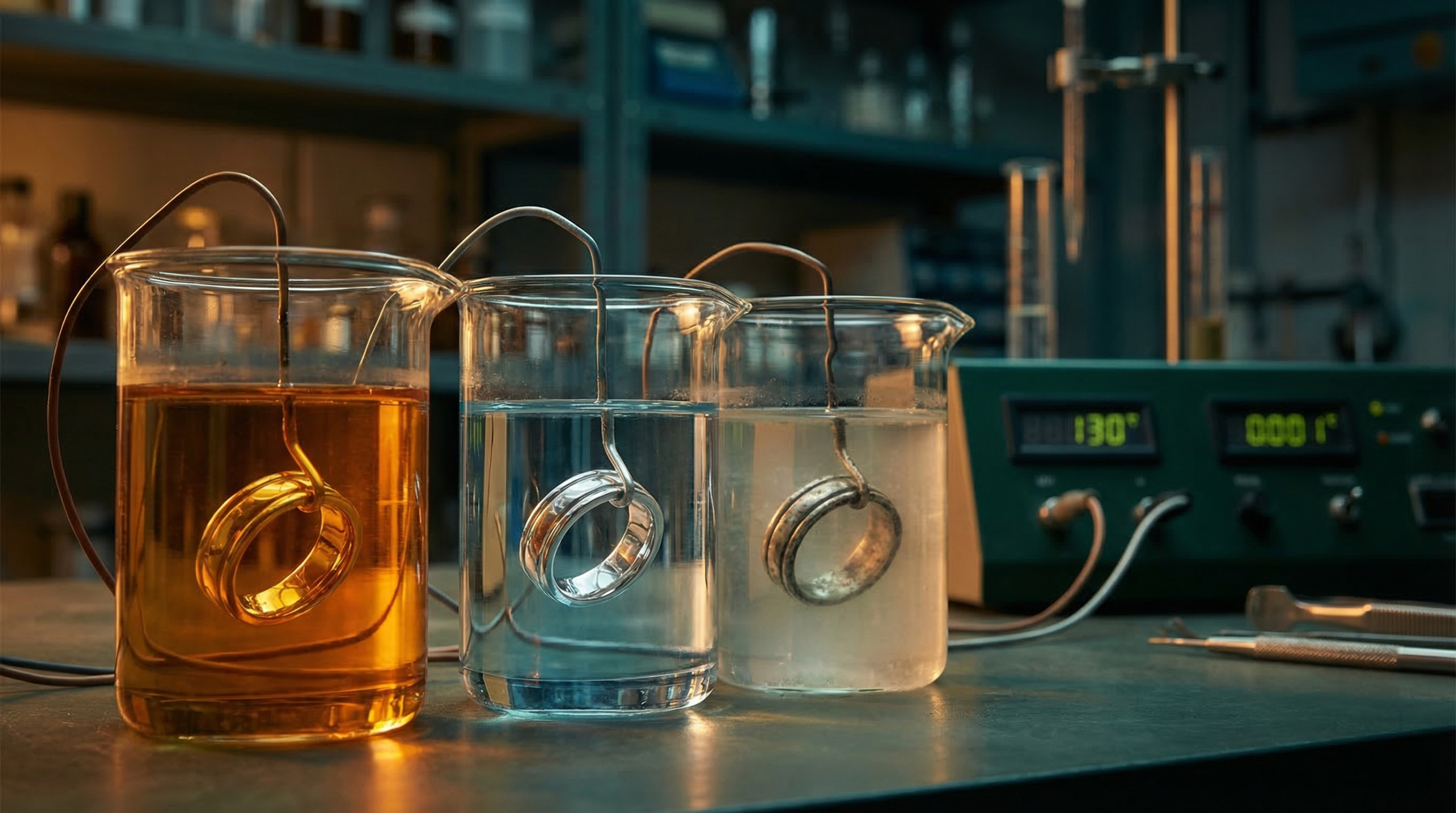
Electroplating is the process of depositing a thin, even layer of metal onto a jewelry piece using electrical current. The piece to be plated is submerged in a solution containing dissolved metal ions. When electrical current passes through the solution, metal particles migrate and bond permanently to the surface of the jewelry.
The thickness of that coating is controlled precisely by adjusting current intensity and duration. Jewelers measure plating in microns — one micron is one-thousandth of a millimeter. Standard jewelry plating ranges from 0.5 to 2.5 microns; professional-grade services can go significantly thicker for longer wear life.
The result: a piece with the color, shine, and protective properties of the plated metal — even if the base metal underneath is something entirely different. It's not magic. It's electrochemistry. And when it's done right, the difference is dramatic.
The Three Most Common Jewelry Electroplating Services
Gold Plating
Gold plating deposits a layer of yellow, rose, or white gold over a base metal or alloy. It's used to restore gold-tone jewelry that has worn down to base metal, to convert sterling silver pieces to a gold finish, or to refresh heirloom pieces that have dulled over decades. Our gold plating service is one of our most requested — the results are visually dramatic, and when done at proper thickness, they last for years.
Rhodium Plating
Rhodium is a member of the platinum family: extraordinarily hard, intensely reflective, and completely tarnish-resistant. Nearly all white gold jewelry sold today is rhodium-plated at the factory — that coating gives white gold its bright, mirror-like finish. Over 12–36 months of daily wear, the rhodium layer wears off and the ring starts showing a yellowish tint. Rhodium replating restores the factory finish in a single service.
Silver Plating
Silver plating adds a silver finish to base metal pieces — commonly used for vintage costume jewelry, silverware, and fashion pieces that have worn down to brass or copper underneath. It can also restore antique silver pieces where heavy oxidation can't be fully corrected by polishing alone.
How the Electroplating Process Works, Step by Step
Professional electroplating is far more involved than dropping a ring in a solution. Proper preparation is what separates a plating job that lasts years from one that peels within months.
- Inspection. The jeweler examines the piece for scratches, damage, or structural issues to address before plating. Plating over deep scratches locks them in permanently — prep work is not optional.
- Deep cleaning. The piece is ultrasonically cleaned and polished to remove all grease, oils, and oxidation. Any surface contamination prevents the plating from bonding correctly.
- Surface preparation. Depending on the base metal, a thin “strike” layer may be applied first — an initial coating that promotes adhesion of the final plating.
- Plating bath. The piece is submerged in the plating solution. Precise electrical current is applied for a calculated duration to achieve the target coating thickness.
- Rinsing and finishing. The piece is rinsed, dried, and inspected. A final hand-polish ensures the coating is even and the finish is exactly right.
A professional electroplating service typically takes 7–14 business days from receipt, depending on the plating type and any required surface prep. Rhodium plating generally runs 7–10 business days; gold plating approximately 1–2 weeks.
How Long Does Jewelry Plating Last?
Three factors determine plating longevity: the thickness of the coating, the base metal, and how the piece is worn and cared for.
Rings wear faster than any other jewelry type because they contact surfaces constantly. A rhodium-plated white gold ring worn daily may need replating every 12–24 months. The same ring worn occasionally could last 5+ years. Gold-plated pendants or earrings typically hold up for years with normal care.
Thicker plating lasts longer — this is where professional plating outperforms cheap alternatives. Flash plating at 0.1–0.3 microns wears off in months. Professional plating at 1–2+ microns can last years with reasonable care. Chlorine, salt water, and harsh chemicals accelerate wear on any plating; removing jewelry before swimming, cleaning, or applying hand sanitizer significantly extends the plating life.
For a full breakdown of post-plating care, see our guide on how to care for newly gold-plated jewelry.
Signs Your Jewelry Needs Replating
- Your white gold ring has warm yellow spots — rhodium has worn through and the gold alloy underneath is showing.
- Your gold-tone piece looks brassy or has dark patches — the gold plating has worn through to the base metal, often brass or copper.
- Your silver piece is dull or blotchy — oxidation and wear have compromised the surface coating.
- The color is uneven — worn plating typically shows first in high-contact areas (inner band, prong shoulders) while protected areas still look good.
The earlier you address plating wear, the better. Heavily worn pieces require more surface prep before replating, which adds time and cost to the service.
Frequently Asked Questions About Jewelry Electroplating
Q: Can any type of jewelry be electroplated?
A: Most metal jewelry can be electroplated — gold, silver, platinum, brass, copper, and stainless steel are all compatible. Some metals require a special adhesion layer first, but very few pieces are truly incompatible. Stones and non-metal components are masked or temporarily removed before plating begins.
Q: Will electroplating cover scratches?
A: No. Plating deposits uniformly over the surface, so any scratches present before plating remain visible afterward. Scratches must be polished out before the piece enters the plating bath — reputable shops include this prep as part of the service.
Q: How much does jewelry electroplating cost?
A: Pricing depends on the plating metal, the size and complexity of the piece, and requested coating thickness. At Quick Jewelry Repairs, gold plating starts at $60 for rings and rhodium plating starts at $69 — pricing varies based on piece type, base metal, and desired thickness. Submit photos of your piece for an accurate quote; we respond quickly.
Q: Is electroplating the same as gold filled or vermeil?
A: No. Electroplating deposits a very thin surface layer of metal. Gold filled has a much thicker layer mechanically bonded to the base (at least 5% of total weight). Gold vermeil is sterling silver with gold plating at a minimum of 2.5 microns. Electroplating is the underlying technology used across all these finishes, but gold filled is manufactured differently and is significantly more durable than standard plating.
Q: Can I electroplate jewelry at home?
A: Home kits exist, but results are inconsistent and wear life is typically very short. Professional equipment controls current, temperature, and solution chemistry with precision — exactly the variables that determine how well plating bonds and how long it lasts. For anything you actually care about, professional service is worth it every time.
Ready to restore a worn or discolored piece? Quick Jewelry Repairs offers professional gold plating and rhodium plating services for customers nationwide. Ship your jewelry, we handle the rest — you'll have it back looking exactly like it should.


