Ring Engraving: Techniques, Metals, Fonts, and What to Know Before You Order
Written by Jules C
March 12, 2026
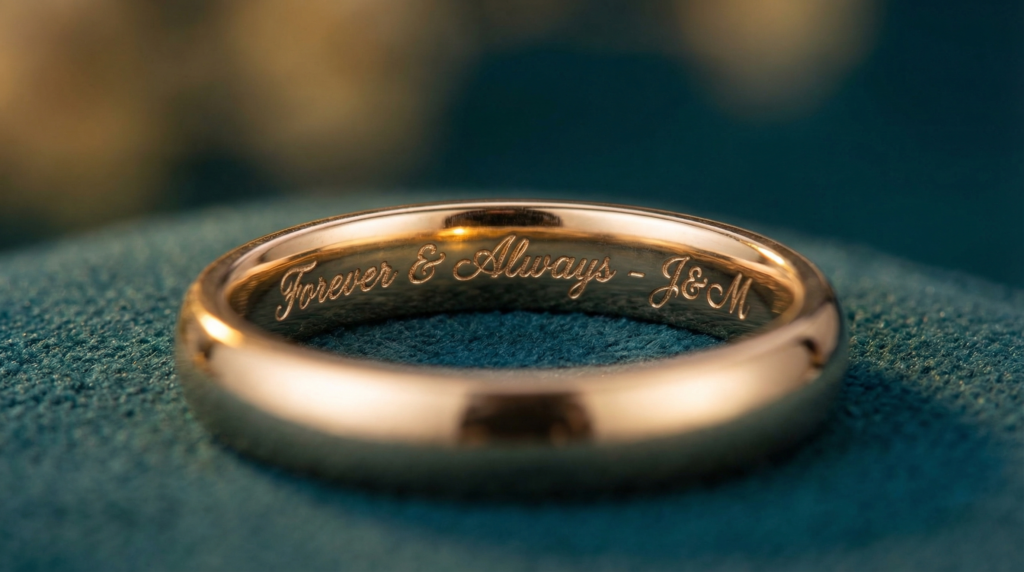
Ring engraving turns a piece of jewelry into something irreplaceable. Whether it's a wedding date inside a band, a name on a signet ring, or a short message on an anniversary gift, engraving adds meaning that outlasts trends — and lasts as long as the metal itself.
But not every ring can be engraved the same way, and not every jeweler offers the same results. The technique used, the metal in the ring, the font you choose, and how many characters actually fit — all of it shapes the final outcome. This guide covers exactly what you need to know before you order.
How Ring Engraving Actually Works
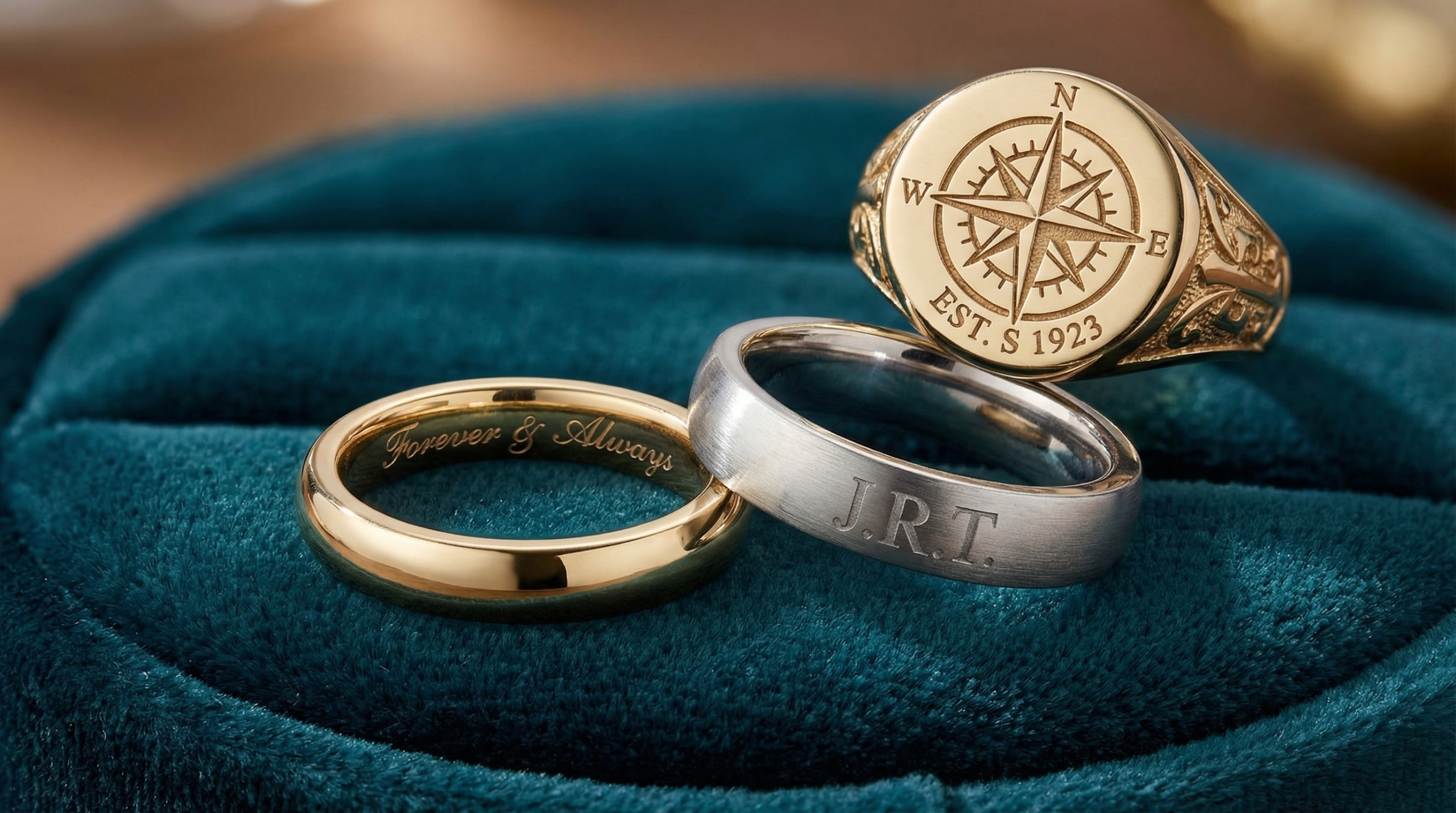
Engraving is the process of cutting text, symbols, or artwork into a metal surface — most often the inside of a ring band, where the inscription sits privately against your skin. Outside (surface) engraving is also possible on signet rings, flat-faced bands, and some decorative styles.
At Quick Jewelry Repairs, we use laser engraving exclusively.
Laser engraving uses a focused beam to etch precise text, symbols, or artwork into the metal surface. The process is highly accurate and works on every ring metal we service — from soft gold to hardened titanium and tungsten, where mechanical tools can't grip cleanly. The result is sharp, permanent, and consistent regardless of font complexity or character count.
Laser is also the only practical method for hard metals. Stainless steel, titanium, and tungsten cannot be engraved by hand or rotary tools — the surface is too hard. Laser handles all of them.
Which Metals Can Be Engraved?
Most ring metals can be engraved. The method varies by hardness:
Gold (10k, 14k, 18k, 24k): All gold alloys engrave well with laser. Lower karat golds (10k, 14k) are harder than high-karat gold and hold fine detail especially well. 18k and 24k gold is softer and requires a careful touch, but produces beautiful, deep-cut inscriptions.
Platinum: Dense, durable, and one of the best metals for engraving. The density makes it one of the best metals for laser engraving — cuts stay crisp for decades. Inside-band inscriptions on platinum are among the most long-lasting you can get.
Sterling silver: Soft enough that engraving cuts are clean and fast. The contrast of fresh-cut silver against a polished surface is sharp and elegant.
Stainless steel: Laser engraving only. The hardened surface doesn't respond to mechanical tools. Laser results are sharp and permanent, though turnaround on stainless is longer than softer metals.
Titanium and tungsten: Laser only. These are among the hardest materials used in rings — no mechanical tool can engrave them cleanly. Laser works well on both, though the engraved contrast tends to be subtler than on softer metals.
Plated rings: Engraving on the outside face of a plated ring will cut through the plating layer. Inside-band engraving on a plated ring is generally fine, since the plating there is less critical and the cut doesn't affect the visible exterior finish.
Fonts, Character Limits, and What Actually Fits
Font selection affects legibility, visual tone, and — critically — how many characters fit inside your band. A thin 2mm wedding band holds far less than a wide signet face.
Script fonts are elegant and traditional, but each character requires more horizontal space. On a standard inside-band inscription (2–3mm wide band), expect to fit 10–15 script characters comfortably.
Block and sans-serif fonts are compact and highly legible at small sizes. The same 2–3mm band can hold 15–20 or more characters, depending on font size.
Custom artwork and signatures are possible with laser engraving — but minimum detail size matters. Your jeweler will advise on whether a specific design can be reproduced at ring-band scale before committing.
General inside-band character capacity guidelines by band width:
- 2–3mm band: 8–15 characters (font-dependent)
- 4–6mm band: 15–25 characters
- 7mm+ band: 25–35 characters
These are guidelines. Your jeweler should always confirm capacity for your specific ring before the order is placed.
Inside vs. Outside Engraving
Inside engraving sits on the interior surface of the band — it's private, doesn't change the exterior appearance of the ring, and is by far the most common type. Dates, initials, names, and short phrases are all standard.
Outside (surface) engraving is visible on the ring's exterior. Milgrain borders, geometric patterns, names across the face of a signet ring — these are exterior applications. They're more visible, more complex, and typically cost more than inside engraving.
Depth also matters. A shallow surface mark wears down over time, especially on frequently worn rings in softer metals. A deeper, well-calibrated laser pass holds its definition for decades. Ask specifically about depth when ordering.
What to Know Before You Order Ring Engraving
A few things to confirm before placing an order:
- Spell-check everything twice. Engraving is permanent. There's no undo for a typo cut into platinum.
- Confirm the character count fits. Send the exact text you want and ask your jeweler to confirm it fits your ring size and band width before engraving begins.
- Understand sizing + engraving timing. If you're also resizing the ring, have the sizing done first — resizing stretches or compresses the metal, which can distort an existing engraving. At Quick Jewelry Repairs, you can combine ring sizing and engraving in a single order, saving you a second round trip.
- Know what “engraving” includes. Some services quote engraving per character; others as a flat fee. Pricing at checkout should be clear before you commit.
For more inspiration on what to actually say inside a ring, the post on wedding band engraving ideas covers 7 meaningful inscription styles worth considering.
How to Order Ring Engraving by Mail
Mail-in engraving is now the standard for most people — particularly for rings being sent in for another repair at the same time. The process is simple and doesn't require a local jeweler appointment:
- Select engraving, choose your font and enter your text
- See the exact price before checkout — no quote requests, no back-and-forth
- Choose your FedEx shipping option at checkout; a prepaid label arrives by email
- Turnaround is approximately 3–5 business days from arrival for most metals; stainless steel and specialty metals require 10–20 business days
- Your ring ships back via FedEx with a new tracking number
Quick Jewelry Repairs offers ring engraving for gold, platinum, ste