


Maybe you’ve inherited something from your grandma, or you’ve recently been into thrift shops- you want to know more about your jewelry, and the only thing that you’re sure of is that it’s old.
But where to start? Well, check out our antique jewelry identification guide below.
What is Antique and Vintage Jewelry?
Vintage jewelry is jewelry that is at least 30 years old, while antique jewelry must be older than a century. This means that there are many different types of vintage and antique jewelry based on fashion trends, manufacturing styles, popular materials, and jewelry stamps.
4 Ways of Identification
1. Figure Out the Jewelry Style
One of the most telling ways to identify your jewelry is by its style, which can correspond to a specific time period or area. Here’s a brief breakdown of the most popular jewelry styles by era:
- Georgian (1700-1830): As one of the oldest and still commercially available styles of jewelry, Georgian jewelry is named after the four kings that ruled England during this period. While this style tends to fluctuate due to the lengthy period of time, it is known for its elaborate designs, colorful precious gemstones, and love of yellow gold. Most pieces were part of a set that could include necklaces, bracelets, rings, earrings, brooches, and even crowns. Due to age, many of these pieces are quite expensive.
- Victorian (1830-1900): Named after the reign of Queen Victoria, this style of jewelry was highly personal to the beloved queen, who was a style-setting icon of her time. During the first years of her marriage, a snake ring that was given to her by her husband, Prince Albert, became wildly popular. After his death, the public joined her method of mourning by wearing black jewelry, set with jet, onyx, and other somber gems such as garnets.
Not everything was gloomy, however; Queen Victoria owned a bright and cheerful bracelet with enameled hearts, which inspired jewelers to experiment with enamel in their own creations. Other styles include acrostic jewelry, or jewelry that spelled out messages with the first letter of the types of stones: REGARDS (ruby, emerald, garnet, amethyst, diamond, and sapphire.) Towards the later part of the Victorian era, a fad for archaeology was responsible for the creation of Egyptian and Ancient Greek designs. The rise of the cameo, or a hard material carved into a portrait, is also attributed to the Victorian era.
This cute little snake ring has a pair of ruby eyes and a diamond head. - Edwardian (1900-1910): This style of jewelry refers to the name of King Edward VII, even though it continued for a period of time after his death. It carries over some of the Victorian era’s femininity with lacy and floral designs, but with a more simple touch. White gold and platinum were popular, as well as garland designs that incorporated bows and leaves.

This beautiful filigree bow piece embodies the Edwardian aesthetic. - Art Nouveau: (1890-1910): Overlapping the Victorian and Edwardian styles, Art Nouveau jewelry is a very distinctive style that’s characterized by nature-inspired designs and smooth, sweeping curves. The colors are more muted and natural, including stones such as opal, amber, and moonstone. Beautifully sculpted pieces of ladies with flowing hair commonly appear in this era.

This brass ring shows typical Art Nouveau detailing; note the nude woman and the flowing, organic lines. - Art Deco (1915-1935): If you’ve watched the Great Gatsby movie adaptation, you should have an inkling of what this style looks like! Art Deco pieces were bold and modern, to reflect the growing flapper power of the day. This style combines sharp, geometric shapes with bright gemstones like sapphires, rubies, and emeralds.

This white gold art deco ring is set with diamonds. - Retro (1930-1940): The Retro jewelry style was created during the war, when materials were scarce. As a result, synthetic and inexpensive materials became popular, such as plastic, rhinestones, and glass. This gave birth to costume jewelry, made popular by Elsa Schiaparelli and other high-end designers at the time.
In addition to these historical styles, there are also some regionally-specific types of jewelry:
- Southwestern: Inspired and produced by Native American artisans and silversmiths, these designs are usually made out of sterling silver or leather, with turquoise, coral, mother-of-pearl, and malachite as common materials. Designs include feather motifs, stamped patterns, conchos, and indigenous art.

Two examples of southwestern rings. - Black Hills: Originating from the gold rush in South Dakota, Black Hills gold has a unique look due to its usage of different gold colors, including yellow, pink, and green. Grapevines and grape leaves make the designs distinctive and easily identifiable. In order for an item to be called Black Hills gold, it must be manufactured in South Dakota.

This Black Hills ring shows off the signature multicolored gold look, with grape leaves.
2. Take Note of Manufacturing Methods
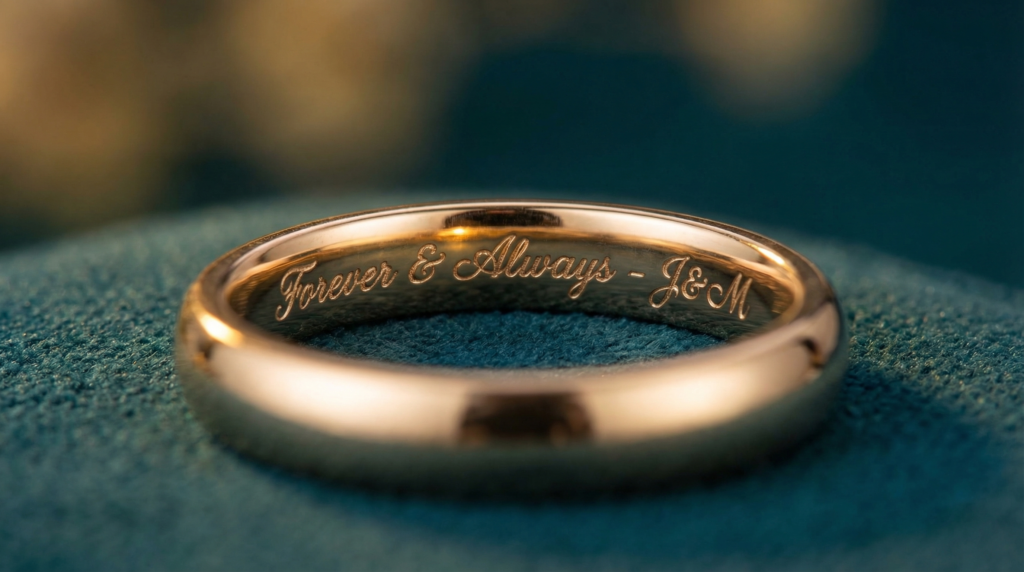
While manufacturing methods drastically vary, certain components and details are very telltale when it comes to dating the jewelry. For instance, hand engraving is indicative of a piece dating at least to the 1900s, especially if it is on a signet ring. Incredibly intricate, small, and lacy filigree work, in combination with white gold or platinum, will often point to Edwardian or Art Deco jewelry. Even stones can be affected; machine stone cutting was introduced in the early 1900s, which created the round brilliant cut that is still the most popular diamond cut today. Prior to that, jewelry from previous eras were set with old, hand-cut gems, such as the rose cut for Georgian and Victorian jewelry and the European cut for Edwardian and Art Nouveau jewelry.
Countries have different standards for their metals as well, which will allow you to figure out where your item is from. As an example; the United States does not consider anything less than 10k (41.6%) gold to be considered gold jewelry. In the UK, however, 9k gold is very popular and this is a common indicator that the item was manufactured there.

3. Spot Popular Materials
Aside from gemstones and metals, different materials were introduced to jewelry at certain points in time. A short list of these materials include:
- Bakelite: The first synthetic plastic, bakelite was created in New York in 1907. Aside from its versatility in creating household implements, it was also used in jewelry due to its unique look and variety of colors, including transparency. Nowadays, it has become a popular collector’s item.
- Camphor Glass: A type of glass made from hydrofluoric acid treatment in order to give it a frosted appearance. It first appeared in the late 1800s as a form of mourning jewelry, but eventually became mainstream. Typical pieces from the 1800s to early 1900s are framed with silver or white gold, with delicate filigree work and occasional marcasite or rhinestone accents.

A vintage pendant made from camphor glass. - Paste: An old term for rhinestone, the material used to create paste stones has changed over time from rock crystals to crystal glass and plastic. This range of composition allows for further dating of the item, as earlier, antique jewelry pieces would contain hand-cut pieces of rock crystal paste instead of a more modern alternative such as plastic.

This beautiful pair of earrings was made from two century-old rhinestones. - Foil Opals: A simulated gemstone that was actually a piece of glass over a thin sheet of sparkly metal, in order to mimic the look of a natural opal. These were introduced in the late Victorian era, and are different from other synthetic opals that were made from plastic or sparkly glass. However, the term “foil opal” is now commonly used to refer to all faux opals. These stones are also popularly used in vintage costume jewelry, especially from Mexican manufacturers.

This piece, probably of Mexican origin, has a more contemporary foil opal. - Palladium: Palladium is a shiny silver-white metal that entered jewelry manufacturing during the 1930s, as platinum had been reserved for military use during the war. It is lighter than platinum, but retains its color much better than white gold, which has a tendency to turn yellow with wear. As a result, a piece of jewelry made from palladium will most likely date from the 1930s or later.

4. Look for Jewelry Stamps
Jewelry stamps or hallmarks on the piece often help determine an item’s origins, or even the year it was made. Some manufacturers were in operation up until a specific year, and other manufacturers change their company hallmark over time. Metal stamps, such as 14k, 18k, 925 (for sterling silver), and PLAT or 950 for platinum can also help you identify the material.
Country-specific hallmarks are also great for determining the item’s location of manufacturing. For instance, the United Kingdom has very well-established assay marks, or metal stamps and other symbols that indicate where the item was tested and certified for its metal content. There are four offices in the UK that are allowed to assay jewelry- London, Sheffield, Birmingham, and Edinburgh. Each of these offices have their own corresponding assay stamp (in order): a leopard’s head, a rose, an anchor, and a castle. You’ll find that every country has their own standards for marking items, and their own unique symbols.

Revival Jewelry and Imitations:
Not all vintage or antique-looking jewelry is actually vintage or antique! Be careful of fakes or revival jewelry, which are pieces that emulate older jewelry styles. It can be difficult to tell, but cheaper materials are usually a dead giveaway. Taking it to an appraiser or a jeweler will also allow you to determine if the piece is legitimate or not.

Now you should be set to do some jewelry investigating on your own after reading this antique jewelry identification guide! Comment below if you have a cool piece you’d like to share, or let us know if you’re interested in vintage jewelry repair!


Community Discussion
Questions, experiences, and expert answers from the QJR community.
I have a ring I found years ago I’d like to understand it’s worth. It looks older by the gold that fastens the ruby colored gemstone in place and the inside band is engraved with “10K 🔼” the triangle appears to be hand engraved and the gemstone is slightly loose within the gold fastening it to the ring and the gold fastening the gemstone is slightly unsymmetrical which makes it appear older.
Hi Michelle! A 10K stamp refers to stated gold purity, not the identity or value of the stone or the age of the ring. A loose stone should be secured before the ring is worn. Please email clear top and side photos to [email protected] so we can assess the setting; valuation requires an examination. You can see the relevant service here: https://quickjewelryrepairs.com/repair/tighten-stones/.
I’m interested in this ring but wanted to get an opinion before I purchased it. It is advertised as a vintage 925 ring set with natural blue and white diamonds. Stamped 925 with an illegible signature stamp. I can’t figure out what era it may be from based on when diamonds were commonly set in silver. It is stated to have a 22mm face. Any advice or thoughts are appreciated
Hi Edythe! The era and stone origin cannot be established from a 925 stamp or from the fact that diamonds are set in silver. Ask the seller for documentation identifying the stones, treatments, and basis for the vintage date, and consider an independent examination before buying. Our appraisal service is here: https://quickjewelryrepairs.com/repair/jewelry-appraisal/.
I have a ring stamped with HDS 14k. Approx 1.1 tdw. Can anyone advise approx age and value?
The ring stamped “HDS 14k” indicates it’s made of 14 karat gold, containing about 58.3% gold, with a total weight of approximately 1.1 troy ounces (tdw). The age of the ring can vary widely based on its design, but if it has vintage characteristics, it could be several decades old. The value primarily depends on the current gold price, craftsmanship, condition, and market demand; typically, you can estimate its value by calculating the gold content (about 0.642 troy ounces of pure gold) and multiplying it by the current market price of gold. For precise valuation, you may want to have it checked by our jewelry appraisal service! 🙂 https://quickjewelryrepairs.com/repair/jewelry-appraisal/
Hi can anyone tell me why the spiral backing ?
I have a ring with a black sapphire that says Beta 00 on the inside looks like a rosegold please help
The “Beta 00” marking might be a reference to the manufacturer or a collection name, though it’s not a standard jewelry hallmark. If the ring appears to be rose gold, it could be made of rose gold or a similar metal alloy. Without additional markings, it’s hard to provide more specifics. Our appraisal service can help you get the details you’re looking for 😉
I would love to find out more information regarding this pendent. HH in a circle for the stamp. It ha a pear shaped Burmese ruby surrounded by pave of diamonds in infinity design all carried on a 18k gold chain with a gold extender…..i hope you get the picture I am sending along with this comment thank you so very much..
Any idea
Hi Angel, thanks for commenting! I reached out via email to help you with your ring 🙂
I have a bracelet with a stamp PL on it and that’s it
The “PL” stamp on your bracelet most likely indicates platinum or a platinum alloy, which is a durable and valuable metal commonly used in fine jewelry. However, in some cases, “PL” could also mean that the bracelet is plated with a different metal, such as gold or silver, though this is less common. Without additional stamps or information, it’s likely referring to platinum, but if you’d like to confirm, you may want to try our appraisal service! 🙂
I have this necklace that was my grandmothers .. I know it’s at least older than me which would be 37yrs old .. my grandpa was an antique dealer so it could’ve been old or new when she got it I’m not sure. Any ideas?
Hi Samantha! The necklace in your image looks to be a vintage or antique piece, possibly from the Art Deco period (1920s-1930s), given the geometric design, intricate filigree work, and use of blue stones. It could be crafted from a base metal or silver-plated material, with glass or synthetic gemstones. If you’re looking to learn more about its exact origin, value, or material, you might want to consider getting it appraised by a professional jewelry appraiser. For more detailed evaluation, you can explore services like our appraisal service – https://quickjewelryrepairs.com/repair/jewelry-appraisal/.
My engagement ring has stardust stamped on it and 14k and FY with a heart around it. It was originally my husband’s mother’s ring.
The “stardust” stamp on your engagement ring is likely a brand or design name, possibly referring to a textured or glittery finish associated with certain vintage jewelry styles. The “14K” stamp indicates that it is 14-karat gold, while “FY” likely refers to “fine yellow” gold, which suggests a yellow gold alloy. The heart around “FY” could be a maker’s mark, possibly unique to the jeweler who crafted the piece. This combination of markings suggests it may have been custom-made or from a particular collection.
If you want to know more about the piece, our jewelry appraisal service would definitely do the trick!
I found a braclet amongst my relatives things and they were unsure of its age or were it originated from as there was a couple generations stuff stored with it.
It has no marking and im assuming is solid silver or paladium as its not the slytist bit magnetic
I would love to no the style, age or whether it is infact even a braclet
It sounds like a unique piece! Since it’s non-magnetic, it could be silver, palladium, or platinum. Look for tarnish (which suggests silver) and any unique design details that might hint at its age or style. To get more specific answers, you may try our jewelry appraisal services! 🙂
I have a pendant and I cannot locate the maker by the hallmark, just wondering if anyone would know the maker ? Or hallmark?
Thank you for reaching out! 🙂 While we aren’t able to attest to the provenance or origin of your piece, our trained gemologist can help with a certified appraisal! This will attest to the materials and market value of your piece.
https://quickjewelryrepairs.com/repair/jewelry-appraisal/
Hi 👋 hoping someone can tell me more bc about a brooch I have. It is a feather quill brooch engraved on the back with the date Sept. 1884 and the initials M.L.P. (—or possibly a T. )
I only seem to be able to upload 1 picture- any advice abut that is appreciated- Engraving is on the back .
Thank you!
Hi Jaime, your feather quill brooch, dated “Sept. 1884” and engraved with initials, could be a Victorian-era piece. Brooches like this were often sentimental keepsakes or commemorative items. The engraving suggests it may have been a gift or memorial piece. To learn more, check for any hallmarks or maker’s marks on the back to identify the origin or material. To get more specific details, you may want to check our Jewelry Appraisal service that we offer here on our website! 🙂
I found this unique piece in a bag of old jewelry. It looks very old and doesn’t respond to a strong magnat. Anyone have idea if it is Georgian or Victorian? Gold filled?
The piece could be Georgian or Victorian, but identifying the exact era depends on its design, craftsmanship, and materials. Since it doesn’t respond to a magnet, it may contain non-ferrous metals like gold or gold-filled material. To determine whether it’s gold-filled and to confirm its age, look for hallmarks or take it to a professional jeweler or appraiser. You can also use our appraisal service for more detailed insights: https://quickjewelryrepairs.com/repair/jewelry-appraisal/. Let us know if you’d like assistance!
Hi I was wondering if the pendant could possibly be from Victorian era it has two pictures inside and the stamp on each frame says 8. Mfg co. I can’t find anything on that?. The front is engraved around the sides and what appears the be a tiny diamond in the middle. Can u help please?
This pendant has Victorian-style design elements like intricate engraving and a starburst pattern with a central gemstone, likely a tiny diamond. The “8. Mfg Co.” stamp may refer to the manufacturer, though it seems uncommon. It could indeed be Victorian or a reproduction. I recommend consulting our appraisal service which is readily available on our website!
I recently purchased several rings at an estate sale. Most are marked 14KT GE Taiwan. I understand that the GE means gold electroplating. My question is, what time frame does the marking Taiwan indicate?
Hi Cathy! Great find! The “Taiwan” marking typically points to pieces made between the 1970s and 1990s, when gold electroplated jewelry from Taiwan was widely produced. If you’d like to get more specific details, you may want to check out our appraisal service through our webpage.
M
Found a piece of gold I think it looks like a pendent with no clasp but a hinge an says C&A the Ro746 reverse 933 hand carved gold colored
Interesting find! That pendant does look hand-carved and possibly vintage. The “C&A” and “RO746 / 933” markings could be maker’s marks or reference codes, but without a full evaluation, it’s hard to say. If you’d like a detailed assessment or testing to confirm if it’s real gold, feel free to reach out through this link: https://quickjewelryrepairs.com/repair/jewelry-appraisal/
I have a ring my mom gave me. The only stamp inside is “Made in Austria”, and the stone used I’m pretty sure is lavender amethyst. I’m also pretty sure the metal is copper, as it keeps staining my finger green. It was found by my uncle at least 30 years ago in his backyard, and it’s barely big enough to fit on my little finger. Can you tell me when about you think this would have been made? It’s very delicate and has some very small almost butterfly shaped lines on either side of the stone.
Thanks for sharing this—what a special piece! “Made in Austria” stamps were commonly used in the mid-20th century, especially on costume jewelry. The green staining does suggest it’s likely copper or a copper alloy, which was also popular in vintage designs. For a more accurate estimate of its origin and value, we recommend checking out our appraisal service here: https://quickjewelryrepairs.com/repair/jewelry-appraisal/
I have this bracelet that was passed down to me years back from my Nana I don’t want to sell this as money means nothing to me it’s sentimental so I don’t care if it’s worth something or not but I want to pass it down to my daughter it’s stamped looks like milko? Or milto or maybe short for milton ? It’s heavyish and it’s got an old fashioned clip on it and it’s specked in the gold it’s very unusual and pretty it looks exspensive maybe 500 pounds ? But I just want to know more about the maker or history of this it looks like early 1900s but I don’t know anything about jewellery can anyone help on the maker of this please so I can tell my daughter about it thank u in advance
Hi there! What a lovely piece to hold onto — and such a special gift to pass down 💛
The “Milko” or “Milto” stamp might refer to a lesser-known maker, possibly even short for Milton, but it’s not a widely recognized hallmark. The vintage clasp and weight definitely suggest it’s an older piece — possibly early-mid 1900s as you guessed.
If you’re curious to get more details on the maker, metal content, and era, our jewelry appraisal service can help give you and your daughter a bit more of the backstory:
👉 https://quickjewelryrepairs.com/repair/jewelry-appraisal/
Thanks for sharing your Nana’s beautiful bracelet with us!
This is the stamp I’m hoping my other post to this went on guys was my Nana bracelet years back want pass it down to my daughter I just want tikkke kore about maker and history it’s heavyish and stamped milto or milko maybe it’s short for milton? It looks old got old clip and very beautiful it’s prob only worth few hundred but don’t matter if it’s worth few hundred or more as it’s sentimental to me I would love to know if anyone could tell me more about the history or maker of this it’s got speckes in the gold on stamp looks like thank u in advance
Hi there! What a beautiful piece to pass down — sounds like it holds a lot of meaning 💛
The stamp you mentioned, “Milto” or “Milko,” could be a maker’s mark, possibly short for Milton as you guessed, but without more details it’s tough to trace the exact origin. The speckles in the gold near the stamp may just be signs of age or the gold’s alloy composition.
If you’d like a more detailed look into the maker, metal content, and value, our appraisal service can help:
👉 https://quickjewelryrepairs.com/repair/jewelry-appraisal/
Thanks for sharing such a special piece!
Showing 20 threads with 38 comments · page 9 of 9