


Maybe you’ve inherited something from your grandma, or you’ve recently been into thrift shops- you want to know more about your jewelry, and the only thing that you’re sure of is that it’s old.
But where to start? Well, check out our antique jewelry identification guide below.
What is Antique and Vintage Jewelry?
Vintage jewelry is jewelry that is at least 30 years old, while antique jewelry must be older than a century. This means that there are many different types of vintage and antique jewelry based on fashion trends, manufacturing styles, popular materials, and jewelry stamps.
4 Ways of Identification
1. Figure Out the Jewelry Style
One of the most telling ways to identify your jewelry is by its style, which can correspond to a specific time period or area. Here’s a brief breakdown of the most popular jewelry styles by era:
- Georgian (1700-1830): As one of the oldest and still commercially available styles of jewelry, Georgian jewelry is named after the four kings that ruled England during this period. While this style tends to fluctuate due to the lengthy period of time, it is known for its elaborate designs, colorful precious gemstones, and love of yellow gold. Most pieces were part of a set that could include necklaces, bracelets, rings, earrings, brooches, and even crowns. Due to age, many of these pieces are quite expensive.
- Victorian (1830-1900): Named after the reign of Queen Victoria, this style of jewelry was highly personal to the beloved queen, who was a style-setting icon of her time. During the first years of her marriage, a snake ring that was given to her by her husband, Prince Albert, became wildly popular. After his death, the public joined her method of mourning by wearing black jewelry, set with jet, onyx, and other somber gems such as garnets.
Not everything was gloomy, however; Queen Victoria owned a bright and cheerful bracelet with enameled hearts, which inspired jewelers to experiment with enamel in their own creations. Other styles include acrostic jewelry, or jewelry that spelled out messages with the first letter of the types of stones: REGARDS (ruby, emerald, garnet, amethyst, diamond, and sapphire.) Towards the later part of the Victorian era, a fad for archaeology was responsible for the creation of Egyptian and Ancient Greek designs. The rise of the cameo, or a hard material carved into a portrait, is also attributed to the Victorian era.
This cute little snake ring has a pair of ruby eyes and a diamond head. - Edwardian (1900-1910): This style of jewelry refers to the name of King Edward VII, even though it continued for a period of time after his death. It carries over some of the Victorian era’s femininity with lacy and floral designs, but with a more simple touch. White gold and platinum were popular, as well as garland designs that incorporated bows and leaves.

This beautiful filigree bow piece embodies the Edwardian aesthetic. - Art Nouveau: (1890-1910): Overlapping the Victorian and Edwardian styles, Art Nouveau jewelry is a very distinctive style that’s characterized by nature-inspired designs and smooth, sweeping curves. The colors are more muted and natural, including stones such as opal, amber, and moonstone. Beautifully sculpted pieces of ladies with flowing hair commonly appear in this era.

This brass ring shows typical Art Nouveau detailing; note the nude woman and the flowing, organic lines. - Art Deco (1915-1935): If you’ve watched the Great Gatsby movie adaptation, you should have an inkling of what this style looks like! Art Deco pieces were bold and modern, to reflect the growing flapper power of the day. This style combines sharp, geometric shapes with bright gemstones like sapphires, rubies, and emeralds.

This white gold art deco ring is set with diamonds. - Retro (1930-1940): The Retro jewelry style was created during the war, when materials were scarce. As a result, synthetic and inexpensive materials became popular, such as plastic, rhinestones, and glass. This gave birth to costume jewelry, made popular by Elsa Schiaparelli and other high-end designers at the time.
In addition to these historical styles, there are also some regionally-specific types of jewelry:
- Southwestern: Inspired and produced by Native American artisans and silversmiths, these designs are usually made out of sterling silver or leather, with turquoise, coral, mother-of-pearl, and malachite as common materials. Designs include feather motifs, stamped patterns, conchos, and indigenous art.

Two examples of southwestern rings. - Black Hills: Originating from the gold rush in South Dakota, Black Hills gold has a unique look due to its usage of different gold colors, including yellow, pink, and green. Grapevines and grape leaves make the designs distinctive and easily identifiable. In order for an item to be called Black Hills gold, it must be manufactured in South Dakota.

This Black Hills ring shows off the signature multicolored gold look, with grape leaves.
2. Take Note of Manufacturing Methods
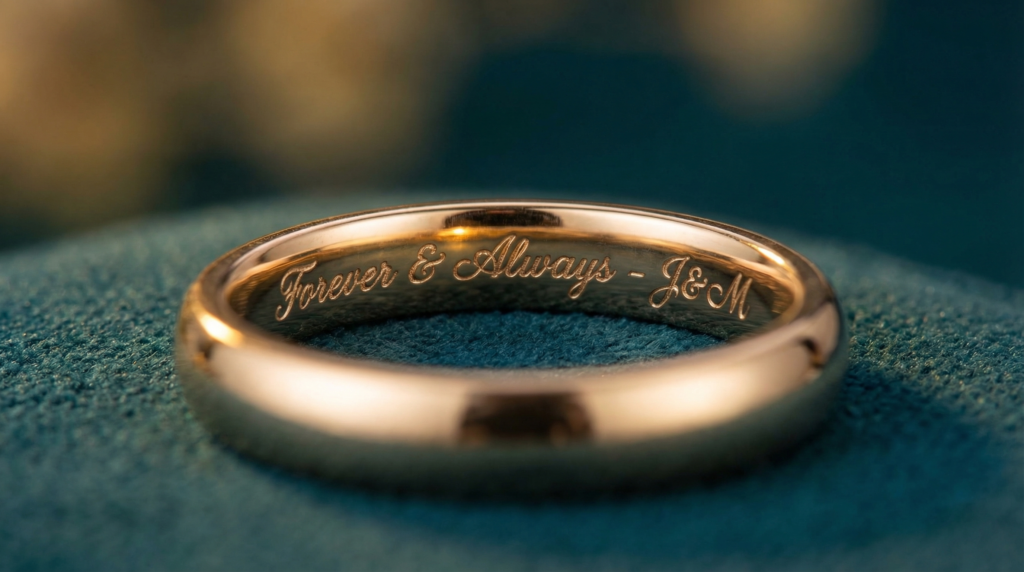
While manufacturing methods drastically vary, certain components and details are very telltale when it comes to dating the jewelry. For instance, hand engraving is indicative of a piece dating at least to the 1900s, especially if it is on a signet ring. Incredibly intricate, small, and lacy filigree work, in combination with white gold or platinum, will often point to Edwardian or Art Deco jewelry. Even stones can be affected; machine stone cutting was introduced in the early 1900s, which created the round brilliant cut that is still the most popular diamond cut today. Prior to that, jewelry from previous eras were set with old, hand-cut gems, such as the rose cut for Georgian and Victorian jewelry and the European cut for Edwardian and Art Nouveau jewelry.
Countries have different standards for their metals as well, which will allow you to figure out where your item is from. As an example; the United States does not consider anything less than 10k (41.6%) gold to be considered gold jewelry. In the UK, however, 9k gold is very popular and this is a common indicator that the item was manufactured there.

3. Spot Popular Materials
Aside from gemstones and metals, different materials were introduced to jewelry at certain points in time. A short list of these materials include:
- Bakelite: The first synthetic plastic, bakelite was created in New York in 1907. Aside from its versatility in creating household implements, it was also used in jewelry due to its unique look and variety of colors, including transparency. Nowadays, it has become a popular collector’s item.
- Camphor Glass: A type of glass made from hydrofluoric acid treatment in order to give it a frosted appearance. It first appeared in the late 1800s as a form of mourning jewelry, but eventually became mainstream. Typical pieces from the 1800s to early 1900s are framed with silver or white gold, with delicate filigree work and occasional marcasite or rhinestone accents.

A vintage pendant made from camphor glass. - Paste: An old term for rhinestone, the material used to create paste stones has changed over time from rock crystals to crystal glass and plastic. This range of composition allows for further dating of the item, as earlier, antique jewelry pieces would contain hand-cut pieces of rock crystal paste instead of a more modern alternative such as plastic.

This beautiful pair of earrings was made from two century-old rhinestones. - Foil Opals: A simulated gemstone that was actually a piece of glass over a thin sheet of sparkly metal, in order to mimic the look of a natural opal. These were introduced in the late Victorian era, and are different from other synthetic opals that were made from plastic or sparkly glass. However, the term “foil opal” is now commonly used to refer to all faux opals. These stones are also popularly used in vintage costume jewelry, especially from Mexican manufacturers.

This piece, probably of Mexican origin, has a more contemporary foil opal. - Palladium: Palladium is a shiny silver-white metal that entered jewelry manufacturing during the 1930s, as platinum had been reserved for military use during the war. It is lighter than platinum, but retains its color much better than white gold, which has a tendency to turn yellow with wear. As a result, a piece of jewelry made from palladium will most likely date from the 1930s or later.

4. Look for Jewelry Stamps
Jewelry stamps or hallmarks on the piece often help determine an item’s origins, or even the year it was made. Some manufacturers were in operation up until a specific year, and other manufacturers change their company hallmark over time. Metal stamps, such as 14k, 18k, 925 (for sterling silver), and PLAT or 950 for platinum can also help you identify the material.
Country-specific hallmarks are also great for determining the item’s location of manufacturing. For instance, the United Kingdom has very well-established assay marks, or metal stamps and other symbols that indicate where the item was tested and certified for its metal content. There are four offices in the UK that are allowed to assay jewelry- London, Sheffield, Birmingham, and Edinburgh. Each of these offices have their own corresponding assay stamp (in order): a leopard’s head, a rose, an anchor, and a castle. You’ll find that every country has their own standards for marking items, and their own unique symbols.

Revival Jewelry and Imitations:
Not all vintage or antique-looking jewelry is actually vintage or antique! Be careful of fakes or revival jewelry, which are pieces that emulate older jewelry styles. It can be difficult to tell, but cheaper materials are usually a dead giveaway. Taking it to an appraiser or a jeweler will also allow you to determine if the piece is legitimate or not.

Now you should be set to do some jewelry investigating on your own after reading this antique jewelry identification guide! Comment below if you have a cool piece you’d like to share, or let us know if you’re interested in vintage jewelry repair!


Community Discussion
Questions, experiences, and expert answers from the QJR community.
I am too fond of jewellery. Loved your jewellery. Keep writing such so that i get to know more. Thanks for such amazing writeup.
i was wondering if any one could maybe tell the style just from the picture
I was wondering about this ring what style anything really says s925 on inside not sure how to tell age
I’m not sure of what the stone is. This ring is a sajen 925
Hi Veronica, it looks like it could be a lapis! For a confirmed evaluation, I do suggest getting this appraised through us. Here’s a link with more info and how you can place an order. 🙂
https://quickjewelryrepairs.com/repair/appraisal/jewelry-appraisal/
I thought lapis was blue with golden specks or chunks? I’ve never seen lapis with green before. Hhmmmm well ya learn something new everyday 🙂 lol
It looks similar to Amazonite and Chrysocolla, it also looks like a mood ring I have, does it change color when put in cold or warm water???
Azurite Malachite Lapis Chrysocolla Bead
I think it’s more likely Azurite/Malachite, in a 925 sterling setting – opaque blue/green mix …. hope this helps.
I have a very old bracelet that says precious metal and looks like gold but I can’t find anything about what it might mean. Short of having it tested, I am asking for help here.
How can I identify if this ring is precious metal? It has SIL and 2 on the inside.
is it SIL jewellers in America?
the ring is cut in the ‘sparkly’ pattern and is D shaped.
SIL means it’s Silver, it looks as if the edges of this full eternity ring is either gold or gold plated
looks also like those are marcasites in the ‘eternity’ ring pattern…
Really useful is there any reference books available
I have a ring that looks antique it has 16 tiny pearls around 2 red ruby’s it is stamped 10k and in a square box is stamped SA what does that mean
my pendants have yc-74 on the back. does 74 mean the year?
These are the earrings it didn’t post last time
I would recommend you take them to a jeweler and have a gold test on them, as they are so important in the family. As for design, they do resemble gold jewelry out of southern spain/toledo region (strong moorish influence) – later on with the tourist industry, designs similar to this were highlighted with black and sometimes white enamel (‘damascene’) – hope this helps.
Here at QJR we cannot generally comment on the provenance of vintage pieces, although everything Jude says tracks for me! 😀
If you are interested in having the metal tested, then we’d be happy to assist with this 😉 https://quickjewelryrepairs.com/repair/metal-testing/
I have a pair of old goldish hoop earrings that have a stamp on them that says Spain. I would just like to know more about them they are an old family heirloom of a family member that pasted away and my great grandmother would like to know more about them because it was her family’s only valuable that was kept in the family.
I have a ring that seems to be of Edwardian style. It only has a purity mark of PT900? Is this possible for an Edwardian ring or could it be a reproduction? The center stone is an old European cut diamond. I am in the US.
I have my ggmothers initial charms brooch which is dated by chain of custody to late 1800’s, it has a conch shell as it’s “stone”, with what I believe is glass beads leading down to the initial charms. There are no marks. My problem with this is that my ggmother owned property in multiple states, all landlocked, so what is the significance of the shell??
Also, I have a beautiful beveled black stone bracelet with a fancy clasp. It’s marked “India 325”. Can you tell me anything about that? Thank you and thanks for the informative posts!
Hi I’m Kenneth, and I’ve recently acquired a 10k gold millionaires club ring with the name REDKEN HANSEN. I’ve done some searching on the ring but nothing has came up. If anyone knows anything ABOUT this ring,please let me know.
I would assume it’s to do with Sally Hansen redken the hair designer??? Big deal lady and products definitely a millionaire club status
Hi I have a ring that is very old, gold
It says on the engraving
W.m.j 786. Then further along days 70
I have a ring the gem was changed out for an aquamarine gem. But the stamp on it say thailand 825 15. So it has 3 separate stamps upon it and the person who gave it to me said it was his grandmothers engagement ring.
The second ring i have is 14k and I cant figure out the gems that are in it. It has no other stamps so im confused on the Era and type ot could be I think it could be no more than a decade or 2 at most.
An 825 stamp on jewelry indicates that the piece is made from gold and is 19 karats. 825 represents a purity rating of 82.5%, meaning that the piece contains more than 82% gold. Also it looks more like a K than a 15 to me. So
Your ring must be white gold.
Or it could say 925 and just the 9 is squashed making it look like an 8? Which would make it sterling silver But it does look like an 8…
Hope you figure it out 🙂
I HAVE A RING THAT SAYS 38 750 OR 36 750. DOES TIS MEAN ANYTHING TO ANYONE?
750 means 18k gold. If u have any diamonds on the ring the 36 could mean the clarity or size of the diamond. I’m not 100% sure what 36 means but I am 110% sure that a stamp of 750 indicates its 18k gold. Hope this helps a bit 🙂
Hey dose anyone know what F599 means
Hi Maddie! “F599” likely refers to a manufacturer’s code or batch number, but it doesn’t indicate metal type or authenticity. Hope this helps 😀
I have a watch that has “63 Italy” on the inside, and a cursive J. or L. hallmark. Then MK0585 and TUPE on the inside. It’s a solid gold woman’s rope watch with diamonds around the face. The gears are see through in the back with a glass cover. I’m trying to see where or who made this.
Any thoughts on this ring. We Know nothing about it other than it was my father in laws. It says sterling 10K in side. There is another small circle stamp inside but I can’t make it out anything. There is a man and woman on face of ring. The man is wearing a helmet, a total of six fish (2 pairs, 2 singles), a ship on each side (3 mast) with a flag on each mast, what looks like a tree below each ship
looks more like 2 men on the front, and my mind says Navy or Submariners’ symbol (especially w the fishes)…
Hi All. We inherited a trunk from my husband’s grandmother and this small piece was inside. I have no idea what it is. Can you help? Thanks!
Hi there, not sure what that is but it could probably be used as a pendant!
Hi, I do have two similar pieces, but mine are midnight blue. It looks to be a hair pin. If you pull a small piece of hair back then lay the pin flat on your hair and twist, it intertwines your hair around and the more you twist the tighter it gets. If you get them in correctly with the gems evenly displayed they will look elegant and beautiful. Now taking them out is a whole different monster!
Showing 20 threads with 35 comments · page 8 of 9