


Maybe you’ve inherited something from your grandma, or you’ve recently been into thrift shops- you want to know more about your jewelry, and the only thing that you’re sure of is that it’s old.
But where to start? Well, check out our antique jewelry identification guide below.
What is Antique and Vintage Jewelry?
Vintage jewelry is jewelry that is at least 30 years old, while antique jewelry must be older than a century. This means that there are many different types of vintage and antique jewelry based on fashion trends, manufacturing styles, popular materials, and jewelry stamps.
4 Ways of Identification
1. Figure Out the Jewelry Style
One of the most telling ways to identify your jewelry is by its style, which can correspond to a specific time period or area. Here’s a brief breakdown of the most popular jewelry styles by era:
- Georgian (1700-1830): As one of the oldest and still commercially available styles of jewelry, Georgian jewelry is named after the four kings that ruled England during this period. While this style tends to fluctuate due to the lengthy period of time, it is known for its elaborate designs, colorful precious gemstones, and love of yellow gold. Most pieces were part of a set that could include necklaces, bracelets, rings, earrings, brooches, and even crowns. Due to age, many of these pieces are quite expensive.
- Victorian (1830-1900): Named after the reign of Queen Victoria, this style of jewelry was highly personal to the beloved queen, who was a style-setting icon of her time. During the first years of her marriage, a snake ring that was given to her by her husband, Prince Albert, became wildly popular. After his death, the public joined her method of mourning by wearing black jewelry, set with jet, onyx, and other somber gems such as garnets.
Not everything was gloomy, however; Queen Victoria owned a bright and cheerful bracelet with enameled hearts, which inspired jewelers to experiment with enamel in their own creations. Other styles include acrostic jewelry, or jewelry that spelled out messages with the first letter of the types of stones: REGARDS (ruby, emerald, garnet, amethyst, diamond, and sapphire.) Towards the later part of the Victorian era, a fad for archaeology was responsible for the creation of Egyptian and Ancient Greek designs. The rise of the cameo, or a hard material carved into a portrait, is also attributed to the Victorian era.
This cute little snake ring has a pair of ruby eyes and a diamond head. - Edwardian (1900-1910): This style of jewelry refers to the name of King Edward VII, even though it continued for a period of time after his death. It carries over some of the Victorian era’s femininity with lacy and floral designs, but with a more simple touch. White gold and platinum were popular, as well as garland designs that incorporated bows and leaves.

This beautiful filigree bow piece embodies the Edwardian aesthetic. - Art Nouveau: (1890-1910): Overlapping the Victorian and Edwardian styles, Art Nouveau jewelry is a very distinctive style that’s characterized by nature-inspired designs and smooth, sweeping curves. The colors are more muted and natural, including stones such as opal, amber, and moonstone. Beautifully sculpted pieces of ladies with flowing hair commonly appear in this era.

This brass ring shows typical Art Nouveau detailing; note the nude woman and the flowing, organic lines. - Art Deco (1915-1935): If you’ve watched the Great Gatsby movie adaptation, you should have an inkling of what this style looks like! Art Deco pieces were bold and modern, to reflect the growing flapper power of the day. This style combines sharp, geometric shapes with bright gemstones like sapphires, rubies, and emeralds.

This white gold art deco ring is set with diamonds. - Retro (1930-1940): The Retro jewelry style was created during the war, when materials were scarce. As a result, synthetic and inexpensive materials became popular, such as plastic, rhinestones, and glass. This gave birth to costume jewelry, made popular by Elsa Schiaparelli and other high-end designers at the time.
In addition to these historical styles, there are also some regionally-specific types of jewelry:
- Southwestern: Inspired and produced by Native American artisans and silversmiths, these designs are usually made out of sterling silver or leather, with turquoise, coral, mother-of-pearl, and malachite as common materials. Designs include feather motifs, stamped patterns, conchos, and indigenous art.

Two examples of southwestern rings. - Black Hills: Originating from the gold rush in South Dakota, Black Hills gold has a unique look due to its usage of different gold colors, including yellow, pink, and green. Grapevines and grape leaves make the designs distinctive and easily identifiable. In order for an item to be called Black Hills gold, it must be manufactured in South Dakota.

This Black Hills ring shows off the signature multicolored gold look, with grape leaves.
2. Take Note of Manufacturing Methods
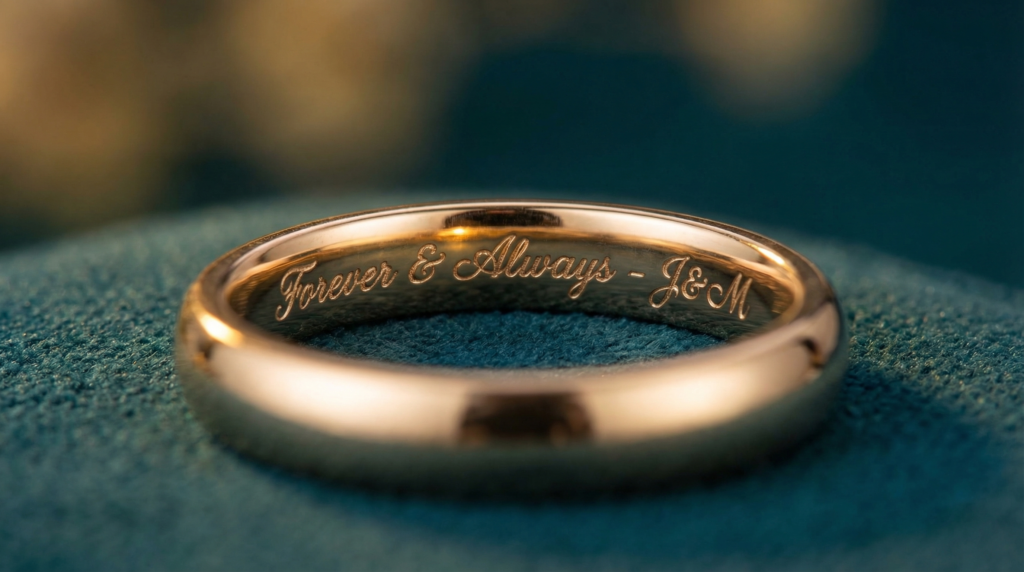
While manufacturing methods drastically vary, certain components and details are very telltale when it comes to dating the jewelry. For instance, hand engraving is indicative of a piece dating at least to the 1900s, especially if it is on a signet ring. Incredibly intricate, small, and lacy filigree work, in combination with white gold or platinum, will often point to Edwardian or Art Deco jewelry. Even stones can be affected; machine stone cutting was introduced in the early 1900s, which created the round brilliant cut that is still the most popular diamond cut today. Prior to that, jewelry from previous eras were set with old, hand-cut gems, such as the rose cut for Georgian and Victorian jewelry and the European cut for Edwardian and Art Nouveau jewelry.
Countries have different standards for their metals as well, which will allow you to figure out where your item is from. As an example; the United States does not consider anything less than 10k (41.6%) gold to be considered gold jewelry. In the UK, however, 9k gold is very popular and this is a common indicator that the item was manufactured there.

3. Spot Popular Materials
Aside from gemstones and metals, different materials were introduced to jewelry at certain points in time. A short list of these materials include:
- Bakelite: The first synthetic plastic, bakelite was created in New York in 1907. Aside from its versatility in creating household implements, it was also used in jewelry due to its unique look and variety of colors, including transparency. Nowadays, it has become a popular collector’s item.
- Camphor Glass: A type of glass made from hydrofluoric acid treatment in order to give it a frosted appearance. It first appeared in the late 1800s as a form of mourning jewelry, but eventually became mainstream. Typical pieces from the 1800s to early 1900s are framed with silver or white gold, with delicate filigree work and occasional marcasite or rhinestone accents.

A vintage pendant made from camphor glass. - Paste: An old term for rhinestone, the material used to create paste stones has changed over time from rock crystals to crystal glass and plastic. This range of composition allows for further dating of the item, as earlier, antique jewelry pieces would contain hand-cut pieces of rock crystal paste instead of a more modern alternative such as plastic.

This beautiful pair of earrings was made from two century-old rhinestones. - Foil Opals: A simulated gemstone that was actually a piece of glass over a thin sheet of sparkly metal, in order to mimic the look of a natural opal. These were introduced in the late Victorian era, and are different from other synthetic opals that were made from plastic or sparkly glass. However, the term “foil opal” is now commonly used to refer to all faux opals. These stones are also popularly used in vintage costume jewelry, especially from Mexican manufacturers.

This piece, probably of Mexican origin, has a more contemporary foil opal. - Palladium: Palladium is a shiny silver-white metal that entered jewelry manufacturing during the 1930s, as platinum had been reserved for military use during the war. It is lighter than platinum, but retains its color much better than white gold, which has a tendency to turn yellow with wear. As a result, a piece of jewelry made from palladium will most likely date from the 1930s or later.

4. Look for Jewelry Stamps
Jewelry stamps or hallmarks on the piece often help determine an item’s origins, or even the year it was made. Some manufacturers were in operation up until a specific year, and other manufacturers change their company hallmark over time. Metal stamps, such as 14k, 18k, 925 (for sterling silver), and PLAT or 950 for platinum can also help you identify the material.
Country-specific hallmarks are also great for determining the item’s location of manufacturing. For instance, the United Kingdom has very well-established assay marks, or metal stamps and other symbols that indicate where the item was tested and certified for its metal content. There are four offices in the UK that are allowed to assay jewelry- London, Sheffield, Birmingham, and Edinburgh. Each of these offices have their own corresponding assay stamp (in order): a leopard’s head, a rose, an anchor, and a castle. You’ll find that every country has their own standards for marking items, and their own unique symbols.

Revival Jewelry and Imitations:
Not all vintage or antique-looking jewelry is actually vintage or antique! Be careful of fakes or revival jewelry, which are pieces that emulate older jewelry styles. It can be difficult to tell, but cheaper materials are usually a dead giveaway. Taking it to an appraiser or a jeweler will also allow you to determine if the piece is legitimate or not.

Now you should be set to do some jewelry investigating on your own after reading this antique jewelry identification guide! Comment below if you have a cool piece you’d like to share, or let us know if you’re interested in vintage jewelry repair!


Community Discussion
Questions, experiences, and expert answers from the QJR community.
I have a marking with “P” on the jewelry ring and it is silver or platinum looking. The diamonds are in clusters and is beautifully designed. Anyone know what the letter “P” means stamped?
Very nice information on vintage antique jewelry. In the content added 4 points, which are for the jewelry identification.
My 86-year-old mother found this ring in a creek from a small coal mining town in Shamokin Pennsylvania and she was eight years old. I’m very good with research and identification but have come up with nothing. Please see the attached photo. There’s a very fancy symbol on the inside of the ring next to 14. Any comments would be greatly appreciated. Thanks so very much!
Here’s another ring from my grandmothers estate. I believe this is considered a waterfall diamond cluster ring. I have an entire tall boy jewelry box filled with my grandmothers estate jewelry
Attached is the symbol inside signet ring
Could you suggest a good book on identifying and dating vintage jewelry?
Makers mark ID?
I have an opal and diamond ring which my grandad gave to my grandma, I think it is from early 1960s (as they were married in 1962 and its her engagement ring) it has one set of stamps which read C S 18CT PLAT and a second set which looks like 6404 (but the 6 and 0 are not as clear as the 4s and maybe be a symbol). Could these tell me anything about the ring?
yes, 18ct gold stamp plus platinum = 18ct PLAT often platinum was used as the claws around the stone, a bit hard without photos though. CS could be the maker’s mark.
I found a sweet little ring with three tiny diamonds on it in my Mother’s jewelry box after she passed. The ring has stamping in it that reads V3D14KRSP. I am sure the 14K is for the type of gold but there are also two triangles underneath the stamping, the left one with 2 c’s in it the & between another triangle with a mark that looks to be a “free form” K in it. I know it is a shot in the dark, but any information would be wonderful.
Hello I have yellow gold ring(well I think it’s gold) anyway it has a stamp that says jmco. I’ve never seen it before. Just curious thanks
I’ve recently purchased a metal bracelet from a yard sale and it has a marking of what looks like a flying bird and a word that follows that looks like cira. Does anyone know what it means?
Oh! My grandmother has some jewelry from that brand, the bird and Cira is the makers mark. I haven’t been able to find out much about the brand though.
It is not a bird, it is a horse with Wings,
A Pegasus, It is not CIRA, its CORO.. The jewelry makers mark.
That you should be able to tell is a CORO piece, with a Pegasus image.. dating the piece, check out jewelry marks it should tell you when the Pegasus was used with the Coro name..
can anyone help me as to what my earrings are? they are screw back and on the bit you turn to screw it says 830 and on the droplet at back it says BRDR.N but D could be an O and below that it says G then a mark that looks like to me a tower with 3 windows and like 3 splashes coming out the top then the letter S, the back is silver and front of them is gold, no tarnish marks on gold at front
I have a (I think) Vintage ladies 10k gold timepiece.
It’s “rolled gold” which is a bit better than gold plated!
I Hello! Hope you can help me. I inherited a gol/silver (cannot tell but see more gold on all of the little round rings that cover the length of the piece. It has a very large oval muted green color stone (almost like it’s charm) but very heavy. The stone is sitting atop an ornate design approx. 1/4-1/2 inches tall. The ornate part holds the stone but is flanked on each end with with delicate white faces set upon a coral stones.
Hello! Hope you can help me. I inherited a gol/silver (cannot tell but see more gold on all of the little round rings that cover the length of the piece. It has a very large oval muted green color stone (almost like it’s charm) but very heavy. The stone is sitting atop an ornate design approx. 1/4-1/2 inches tall. The ornate part holds the stone but is flanked on each end with with delicate white faces set upon a coral stones.
this looks like a very ornate fob chain – used for pocket watches, the green stone is often green onyx, the chains were often gold plated or gold-filled, otherwise, they would have a gold stamp on them. the side pieces are cameos. It is a beautiful piece.
See below…
RE: Hello! Hope you can help me. I inherited a gol/silver (cannot tell but see more gold on all of the little round rings that cover the length of the piece. It has a very large oval muted green color stone (almost like it’s charm) but very heavy. The stone is sitting atop an ornate design approx. 1/4-1/2 inches tall. The ornate part holds the stone but is flanked on each end with with delicate white faces set upon a coral stones.
If you look closely do you see any numbers, letters, or designs that aren’t visible when wearing?
Does anyone know anything about this
It looks to me like “sterling” meaning it’s 925 silver the MV would be the maker
I have a bracelet that I believe to be art deco bracelet. The diamonds are real. But I can not find any stamp or hallmark on it. I have not had it tested. Just trying to figure out things on my own. It’s not magnetic. That’s as far as I have got myself to identifying metal.
I have a pendant and can’t find it anywhere need help identifying..
I have a ring that fell out of a bag of bath salts. Not sure if it’s real gold .. can’t find markings. Looks hand made.. anyone seen anything similar.. or have ideas
you can take it to a jeweler to have it tested to find out.
Showing 20 threads with 28 comments · page 4 of 9